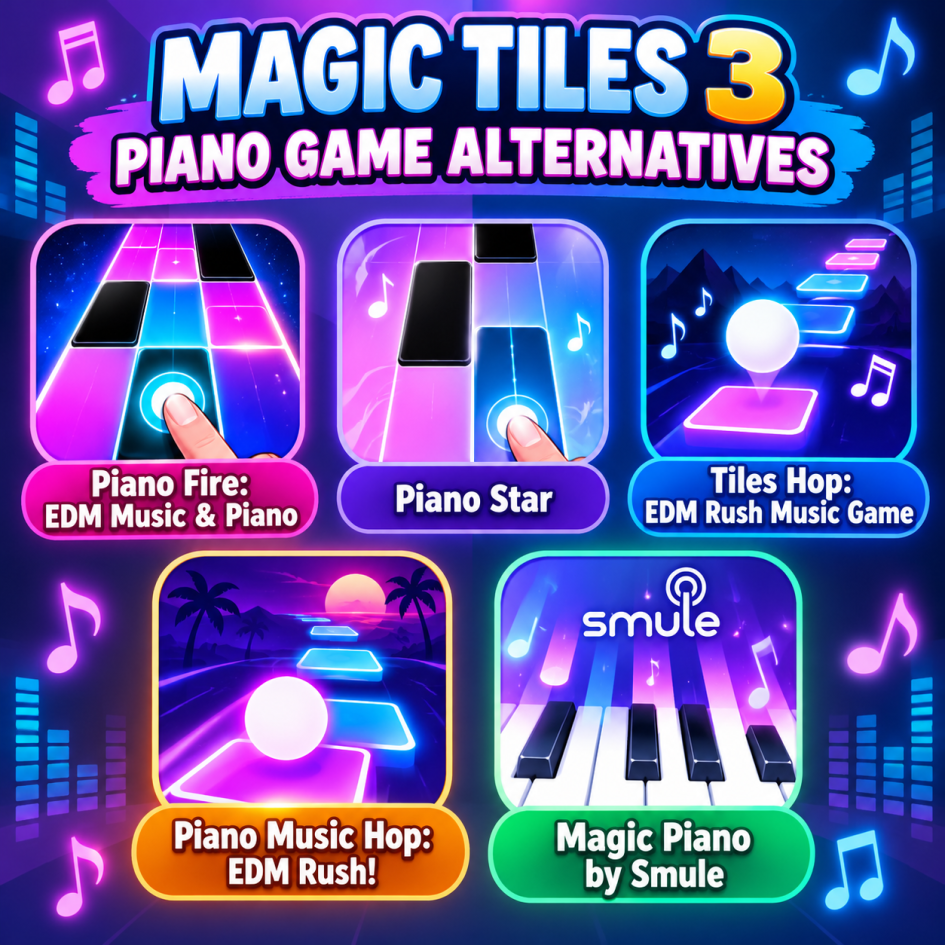
If you enjoy fast-paced rhythm games where every tap needs to match the beat, there are plenty of alternatives to Magic Tiles 3 – Piano Game. These games use similar mechanics while introducing different song libraries, visual styles, game modes, and challenges. Here are five alternatives worth checking out.
1. Piano Fire: EDM Music & Piano combines piano-tile gameplay with electronic dance music. Players tap tiles continuously while following the melody, with faster songs increasing the difficulty. The game includes music from different styles and uses colourful visual effects to make each performance more energetic. Its straightforward controls make it easy to start playing, while high-speed tracks provide a tougher challenge as reaction times become more important. The game also supports offline play, making it suitable for quick sessions without an internet connection.
2. Piano Star follows the familiar black-tile rhythm format but adds several gameplay variations. Players tap individual tiles, hold longer notes and quickly hit double tiles while following popular and classical songs. The game regularly adds new piano songs and includes Endless Mode for players who want to continue after completing standard tracks. It also features PvP and offline modes, giving the basic piano-tapping formula additional ways to play.
3. Tiles Hop: EDM Rush Music Game takes the piano-tile concept in a different direction. Instead of tapping individual notes directly, players control a bouncing music ball that moves across tiles in time with the music. Each tile represents part of the song, so successful runs depend on timing and rhythm. The game features EDM and other musical styles, dynamic tile paths, colourful effects and an Endless Mode. This makes the experience more movement-focused while retaining the fast reactions associated with piano-tile games.
4. Piano Music Hop: EDM Rush combines rhythm gameplay with a 3D ball-running format. Players press and drag a ball so that it jumps between colourful piano tiles while following the rhythm of the selected song. The controls are deliberately simple, but later sections can demand faster reactions and greater accuracy. The game also offers periodically added songs, different visual effects, offline play and a scoring system based on successfully navigating the music track.
5. Magic Piano by Smule provides a more performance-oriented approach to rhythm gaming. Instead of simply tapping a fixed stream of tiles, players follow beams of light to play notes from a large collection of songs. The app offers multiple difficulty levels, rhythm and tempo controls, and a catalogue covering pop, classical and other genres. It also includes social features that let players share performances and interact with other musicians. A Composer feature adds another layer by allowing users to create their own music.
These five games all build on the same basic appeal: matching your fingers to music while trying to maintain accuracy and rhythm. However, their approaches range from traditional piano-tile tapping to bouncing-ball mechanics and more expressive musical performance.
Leave a Reply